The short answer
Exposed aggregate vs stamped concrete comes down to grip and upkeep. Exposed aggregate costs about the same as a broom finish, $8 to $12 a square foot in HomeAdvisor's ranges, and stays grippy in the rain. Stamped runs $12 to $18 and needs a sealer that gets slick when wet unless grit is added. Broom finish is the plain, low-cost choice.
What is the difference between exposed aggregate, stamped and broom finish concrete?
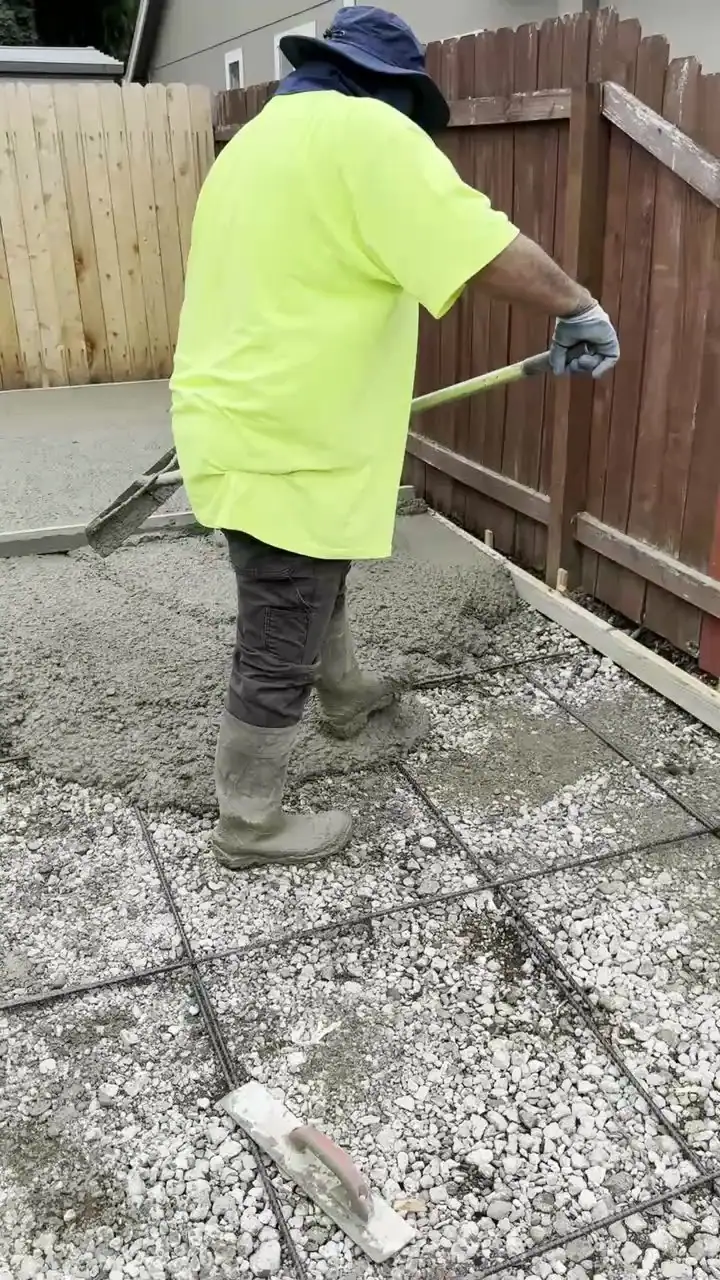
All three start as the same concrete slab on the same compacted gravel base. The difference is what the crew does to the top in the hours after the pour, and that top layer decides how the surface looks, how it grips and how much care it needs.
Broom finish
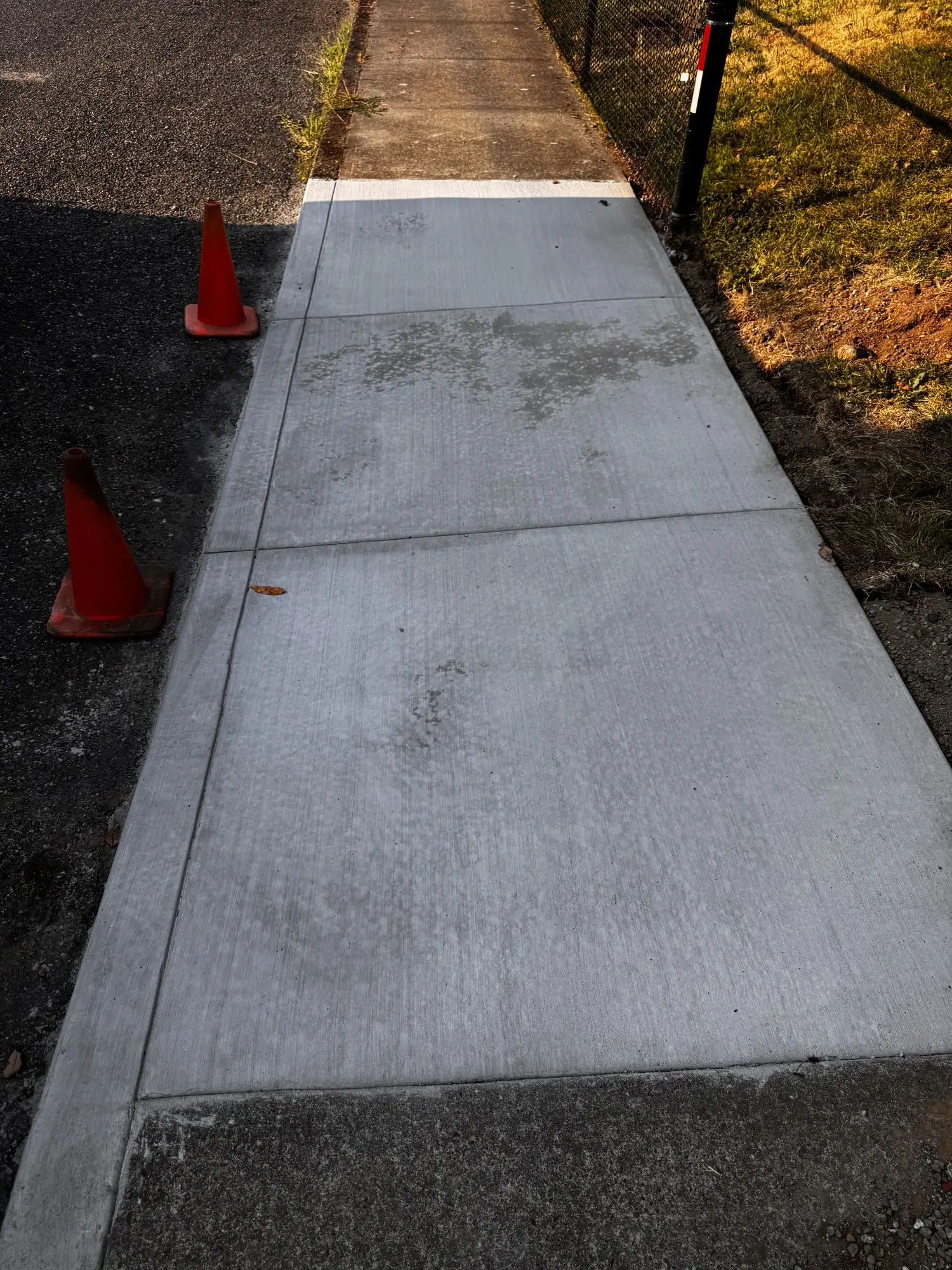
After the surface is floated smooth, the finisher pulls a stiff broom across it, leaving fine ridges. It's the standard finish for driveways, sidewalks and steps because the ridges give tires and shoes something to grip. HomeGuide describes a standard concrete driveway as typically having a simple broom finish. It needs no special materials, which is why it's the cheapest of the three. See our broom finish concrete page for where it fits best.
Exposed aggregate
Here the stones in the concrete become the surface. Angi describes the process: the stones are either mixed into the concrete or spread over the top after the pour, a chemical retarder is sprayed on to keep the top layer of cement from hardening, and the next day that layer is washed off to uncover the rock. A sealer goes on afterward. The result is a pebbly surface that takes its color from the stone, and the texture hides dirt and tire marks well. More on it on our exposed aggregate page.
Stamped
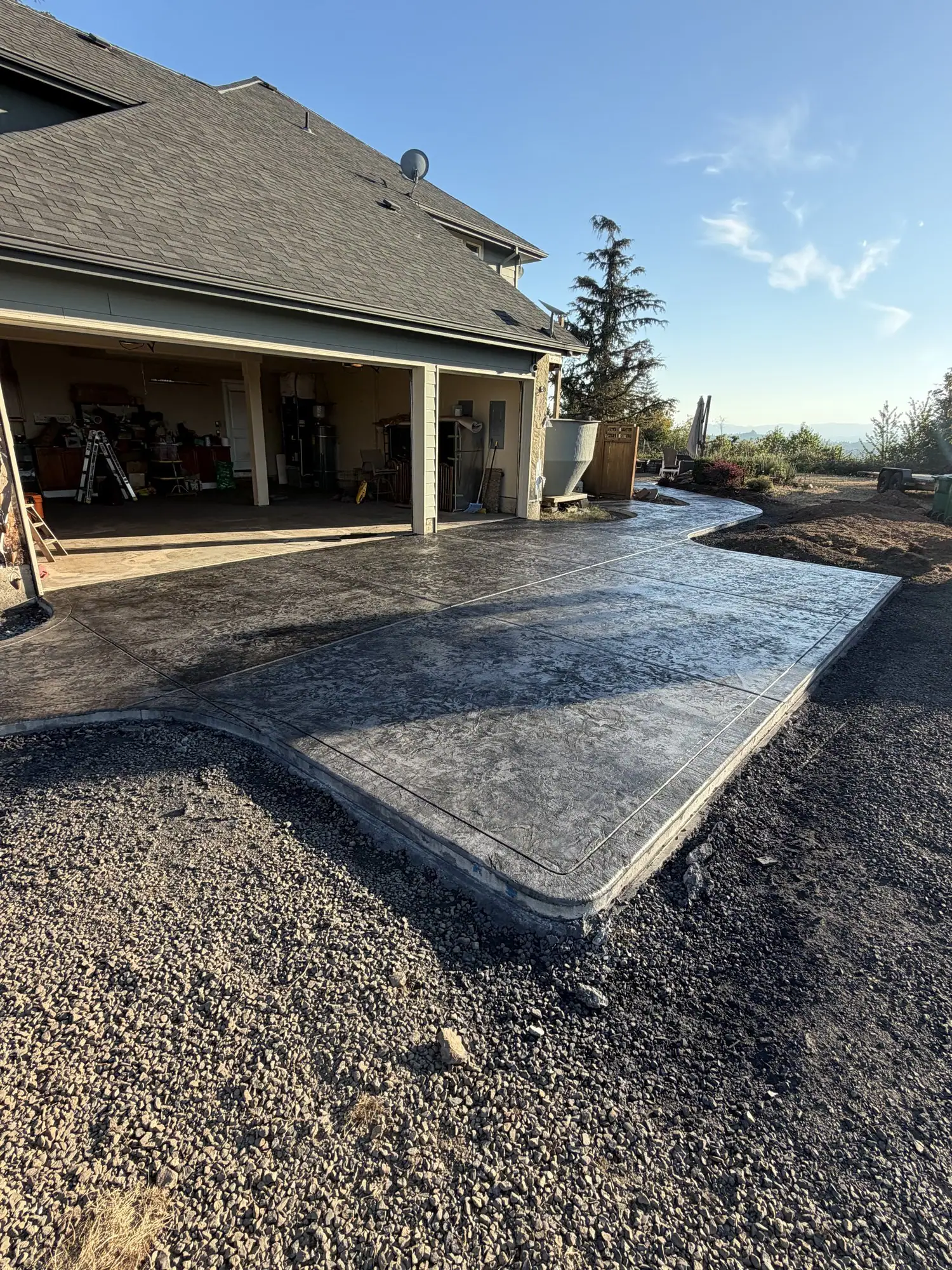
Color is added to the concrete or spread on the surface, then rubber stamps are pressed into it while it's still soft, copying stone, slate, brick or wood. HomeAdvisor’s stamped concrete guide lists patterns from cobblestone and fractured slate to ashlar stone and wood plank. The surface is sealed afterward, which protects the color and gives it a sheen. It's the most decorative of the three and the one with the most upkeep. Our stamped concrete page shows the work.
Exposed aggregate vs stamped concrete cost: which costs more?
Stamped costs the most. HomeAdvisor’s concrete driveway guide puts broom finish and exposed aggregate in the same band, $8 to $12 a square foot, with stamped at $12 to $18 and plain concrete at $6 to $8. HomeAdvisor's stamped concrete guide runs from $8 to $12 for a simple one-color pattern up to $18 to $28 for complex designs with hand-tooled detail. Angi puts exposed aggregate at about $2 to $3 a square foot more than standard concrete. These are published ranges, not MJ's prices.
On a 400 square foot two-car driveway, those rates come to about $3,200 to $4,800 for a broom finish and $4,800 to $7,200 for stamped. Our concrete cost guide for Vancouver has those examples and the full price table, so it isn't repeated here.
The price on the estimate is not the whole cost. A stamped driveway needs resealing every few years to keep its color and protect the surface, and exposed aggregate needs it a little less often. HomeGuide lists professional concrete sealing at $1 to $3 a square foot, so resealing that same 400 square foot driveway runs about $400 to $1,200 each time. A broom finish driveway can go without sealer, though sealing still helps it shed water and stains.
Which finish is least slippery in the rain?
Broom finish and exposed aggregate. Both have real texture in the concrete itself, so they keep their grip when wet. A sealed stamped surface is the slick one. Concrete Network explains that most decorative concrete sealers pass slip-resistance standards when dry, but when wet most fail or are borderline, which is why most walkways and driveways are broom finished or textured. HomeAdvisor gives the same advice in short: skip glossy sealers outdoors, because they get slick when wet.
Stamped concrete can be made safer. The fix Concrete Network recommends is a clear plastic grit mixed into the final coat of sealer. It disappears to the eye but leaves a rough surface underfoot, especially when wet. Two things to know: sealer with grit has to be rolled on, not sprayed, and the grit wears away with the sealer, so it gets renewed every time the surface is resealed. Picking a low-gloss sealer helps too.
In Vancouver, where most of the rain falls from October to May, the bigger slip risk on any finish is what grows on it. Moss and algae on a shaded walkway are slick no matter how the concrete was finished. On a slope or on steps, a broom finish with the ridges running across the slope gives the most grip, and that is where it earns its place even on a house with a stamped patio.
Which holds up best to moss, freeze-thaw and studded tires?
How long concrete lasts depends more on the concrete and how it was poured than on the finish. The Pennsylvania Aggregates and Concrete Association recommends that concrete facing winter weather be at least 4,000 psi, with a water-to-cement ratio no higher than 0.45 and 5% to 7% entrained air, and that it be placed, finished and cured properly. That applies to all three finishes. Ask what mix your contractor is ordering.
Freeze-thaw and de-icers
Vancouver gets a few hard freezes most winters, which is mild compared with colder states. The bigger risk here is de-icer. The same association says not to use de-icers on concrete less than a year old, and never to use products with ammonium nitrate or ammonium sulfate, which can destroy a concrete surface. It also says silane or siloxane penetrating sealers give the most protection. Angi notes that heavy use of de-icing salt can loosen the stones in exposed aggregate. Sand gives traction without any of that risk.
Moss
Moss and algae grow on any concrete that stays damp and shaded. The texture that gives exposed aggregate its grip also gives moss and dirt somewhere to sit, so it needs a wash now and then. HomeGuide says a pressure washer up to 3,000 psi is fine on exposed aggregate, but more force can loosen the stones. A stamped surface rinses clean easily while its sealer is in good shape. Broom finish holds some moss in its ridges but can be scrubbed hard without harm.
Studded tires
Studded tires are legal in Washington from November 1 to March 31, and WSDOT says they cause $20 million to $29 million in damage to state roads each winter. On a home driveway, cars move slowly, but they turn and stop in the same spots every day. On a stamped driveway, that wear shows first in the sealer and the colored surface, which is one more reason stamped driveways get resealed every few years. Broom finish and exposed aggregate have no colored coating on top to scuff.
Does exposed aggregate need to be sealed, and how often?
Yes. Angi says exposed aggregate should be resealed about every three years, and HomeGuide says every 2 to 3 years. Sealer helps hold the stones in place, keeps water out of the surface and deepens the color of the rock.
Concrete Network’s resealing guide gives a schedule by climate and traffic:
| Conditions | Reseal every |
|---|---|
| Mild climate, light foot or car traffic | 3 to 5 years |
| Frequent freezing and thawing, moderate traffic | 2 to 3 years |
| Harsh climate, de-icing chemicals, heavy traffic | 1 to 2 years |
A Vancouver driveway, with a few freezes a year and everyday car traffic, usually sits between the first two rows. Check it by sprinkling water on it: when the water stops beading and soaks in, it's time.
Stamped concrete needs resealing the most. HomeGuide says colored and stamped concrete must be resealed every 2 to 3 years, and Concrete Network notes that acrylic sealers, the usual choice for stamped work, wear faster than other types. Its experts also warn against piling on too much sealer, which can cloud, bubble or peel; thin coats work best. A broom finish doesn't need sealer, but a penetrating sealer, which soaks in instead of leaving a film on top, helps against stains and de-icer without changing the look.
Whatever the finish, new concrete should cure for 28 to 30 days before the first coat, per HomeGuide, and sealer goes on during a dry spell. A slab poured in late fall often gets its first coat the following spring.
Which finish is easiest to repair or patch later?
Broom finish, by a wide margin. If a section cracks or sinks, a crew can cut it out at the joints, pour a new piece and broom it to match. The new concrete starts out lighter, but the texture matches right away and the color evens out with time.
Exposed aggregate is harder. Angi notes that repairs are more difficult, especially matching the color of the existing stone, because the look depends on getting the same rock mix and exposing it to the same depth. A patch that's close but not exact stands out on a surface where the stones are the whole point.
Stamped is the hardest. A repair needs the same pattern, the same base color and the same accent color, lined up with the stamp pattern around it, and then the whole area needs resealing so the sheen matches. Most stamped repairs replace a full section between joints rather than patching a spot. That's not a reason to avoid stamped work, but it is a reason to get the base, joints and drainage right the first time.
For worn surfaces, there's also resurfacing. HomeGuide lists a decorative overlay at $6 to $20 a square foot, which can give an old slab a new look without tearing it out, as long as the slab underneath is solid.
Can you mix finishes on one project?
Yes, and it's one of the best ways to get a decorative look for less. Because the price is per square foot, putting the costly finish only where people will see it, and the plain one where tires do the work, keeps the bill close to a broom finish job.
- A broom finish driveway with a stamped or exposed aggregate border along the edges or at the street.
- A stamped patio off the back door with broom finish walkways and steps leading to it.
- An exposed aggregate driveway with a smooth tooled band at the edges, which frames the stone and gives a clean line along the lawn.
- A broom finish slab with exposed aggregate bands across it every few feet, lined up with the joints.
Each change of finish normally happens at a joint or a form line, so plan the layout of borders and joints together. It also helps with repairs later, since each section can be replaced on its own.
Which concrete finish is best for a driveway, a patio or a walkway?
Match the finish to how the surface gets used:
| Project | Best fit | Why |
|---|---|---|
| Driveway | Broom finish or exposed aggregate | Grip for tires in the rain, lower cost, no colored coating to wear off. Exposed aggregate hides oil spots and tire marks. |
| Patio | Stamped, or exposed aggregate with smaller stones | Looks the most finished, and a stamped surface is smoother for bare feet and furniture. Add grit to the sealer if it stays wet. |
| Walkways and steps | Broom finish | The most grip on slopes and stairs, especially in shade where moss grows. |
| RV pad or work area | Broom finish | Traction for heavy vehicles and the easiest to repair. |
If you like the look of stamped concrete but worry about the upkeep, put it on the patio and keep the driveway and steps broom finish. If you want something nicer than plain concrete on the driveway without the resealing schedule of stamped, exposed aggregate is the usual answer here. Tevita can price two finishes side by side when he comes out to measure, so you can see the difference in dollars for your own job. Call or text (360) 771-3512.
About MJ Concrete
MJ Concrete is a concrete contractor in Vancouver, WA, owned and run by Tevita Lehauli, pouring driveways, patios, walkways, foundations and walls across Clark County since 2019 (7 years). Every estimate is free and done in person. More about us.