The short answer
Concrete driveway extension cost is about $8 to $12 a square foot for a broom finish in HomeAdvisor's published ranges, and Angi lists an average of $1,900 for a 200 square foot concrete extension. Work on the approach at the street costs extra. These are published ranges, not MJ's prices. In the City of Vancouver, changing a driveway always needs a permit.
How much does a concrete driveway extension cost?
Most concrete extensions are priced by the square foot, at the same rates as a new driveway. HomeAdvisor’s concrete driveway guide lists $6 to $8 a square foot for plain concrete, $8 to $12 for a broom finish or exposed aggregate, and $12 to $18 for stamped. Angi’s driveway extension guide gives an average of $1,900 for a 200 square foot concrete extension, which is about $10 a square foot with labor. HomeGuide's driveway cost guide lists $3 to $12 a square foot to widen or extend a driveway, but that range includes gravel and asphalt. These are national published ranges, not MJ Concrete's prices.
Here is what HomeAdvisor's per square foot rates work out to for four common extensions:
| Extension | Square feet | Broom finish or exposed aggregate ($8 to $12) | Stamped ($12 to $18) |
|---|---|---|---|
| 4-foot strip along a 20-foot driveway | 80 | $640 to $960 | $960 to $1,440 |
| One extra parking space, 10 x 20 ft | 200 | $1,600 to $2,400 | $2,400 to $3,600 |
| One-car driveway widened to two cars, 10 x 24 ft added | 240 | $1,920 to $2,880 | $2,880 to $4,320 |
| Side pad for a boat or trailer, 12 x 30 ft | 360 | $2,880 to $4,320 | $4,320 to $6,480 |
The small jobs at the top of that table are where the math stops working. A crew, a concrete truck and a set of forms cost about the same to bring out for 80 square feet as for 300, so a small extension usually costs more per square foot than the table shows, and many contractors have a minimum charge. For a local comparison, HomeAdvisor’s Vancouver page lists $2,643 to $7,402 for most concrete driveway and flatwork jobs here, with an average of $5,009.
Our Vancouver concrete cost guide has the full price list by finish. For your driveway, Tevita comes out, measures and gives you a price before any work starts. Call or text (360) 771-3512.
What makes a driveway extension cost more?
The square footage sets the base price. These are the things that move it up from there, roughly in the order they show up on the job.
Tying into the old driveway
The edge of the old slab is usually saw-cut straight so the new concrete meets a clean, solid edge instead of a crumbly one. Steel dowels are often drilled into the old slab so the two pieces stay level with each other, with a joint between them so they can move separately. Ask whether your estimate includes this. It's what keeps the seam from turning into a lip you trip on or a crack that keeps growing.
Digging, base rock and grading
Lawn, roots and soft topsoil come out, the ground is shaped so water runs off, and compacted crushed rock goes in under the new concrete. A flat lawn beside the driveway is the cheapest case. A slope, a big tree root or soft fill adds time. HomeGuide puts grading at $700 to $2,500 on average when a driveway needs it.
Removing what's there
If the extension goes where there's an old walkway, a planter curb or a cracked pad, that comes out first. HomeGuide lists concrete removal at $3 to $8 a square foot, including disposal.
The approach at the street
If the extension needs a wider opening at the curb, the new concrete goes into the public right-of-way. That brings a separate permit and more work. HomeAdvisor lists a new driveway apron at $1,530 to $4,320.
Water and pipes
A wider driveway sheds more water, and downspouts, sprinkler lines and drains often sit right where the extension goes. In Vancouver the runoff has to stay on your property, so some extensions need a drain or piped downspouts. That is drainage work for paving, and it's cheaper to plan than to fix after the pour.
Thickness and finish
Most car driveways are 4 inches thick on compacted gravel. If the extension will carry a work truck, a trailer or an RV, plan on 5 to 6 inches, which means more concrete and more base. A stamped extension costs more than broom finish, and matching a decorative driveway takes more care, as covered below.
Do you need a permit to widen a driveway in Vancouver or Clark County?
In the City of Vancouver, yes. The city's driveway and RV pad permit page says modifying a driveway, adding a second driveway or adding an RV pad always requires a permit, and often more than one. Replacing an existing driveway like for like doesn't need the city's land use permit, but an extension changes the driveway, so it isn't like for like.
How the City of Vancouver permit works
- Fill out the city's residential driveway or RV pad request form and upload a simple site plan showing the driveway now and the extension you want.
- A planner enters it, emails you the fee, and tells you whether you also need a right-of-way permit.
- Pay online, by mail or in person.
- A planner reviews the site plan.
- The city issues an over-the-counter (OTC) land use permit, and work can start.
If the work touches the approach, curb or sidewalk, it also needs a right-of-way permit. The city's request form has a box for exactly this, “widen/relocate existing approach,” and the permit is issued only to a licensed contractor on the city's authorized list. Two other rules on the city's page affect the design: a driveway must be paved, because gravel is not permitted, and all drainage must stay on your property.
Unincorporated Clark County and other cities
Outside Vancouver city limits, Clark County's residential permits page lists adding or replacing a driveway as work that needs a residential permit. The same page says concrete slabs on the ground don't need a permit, but driveways are listed separately, so call Permit Services at 564.397.4078 and describe your extension before you assume either way. A new driveway cut onto a county road is a separate Approach/Sidewalk (APS) permit. Camas, Battle Ground and the other cities in the county run their own permit counters.
If you have an HOA, its rules may limit driveway width or materials. Get its approval in writing before the pour.
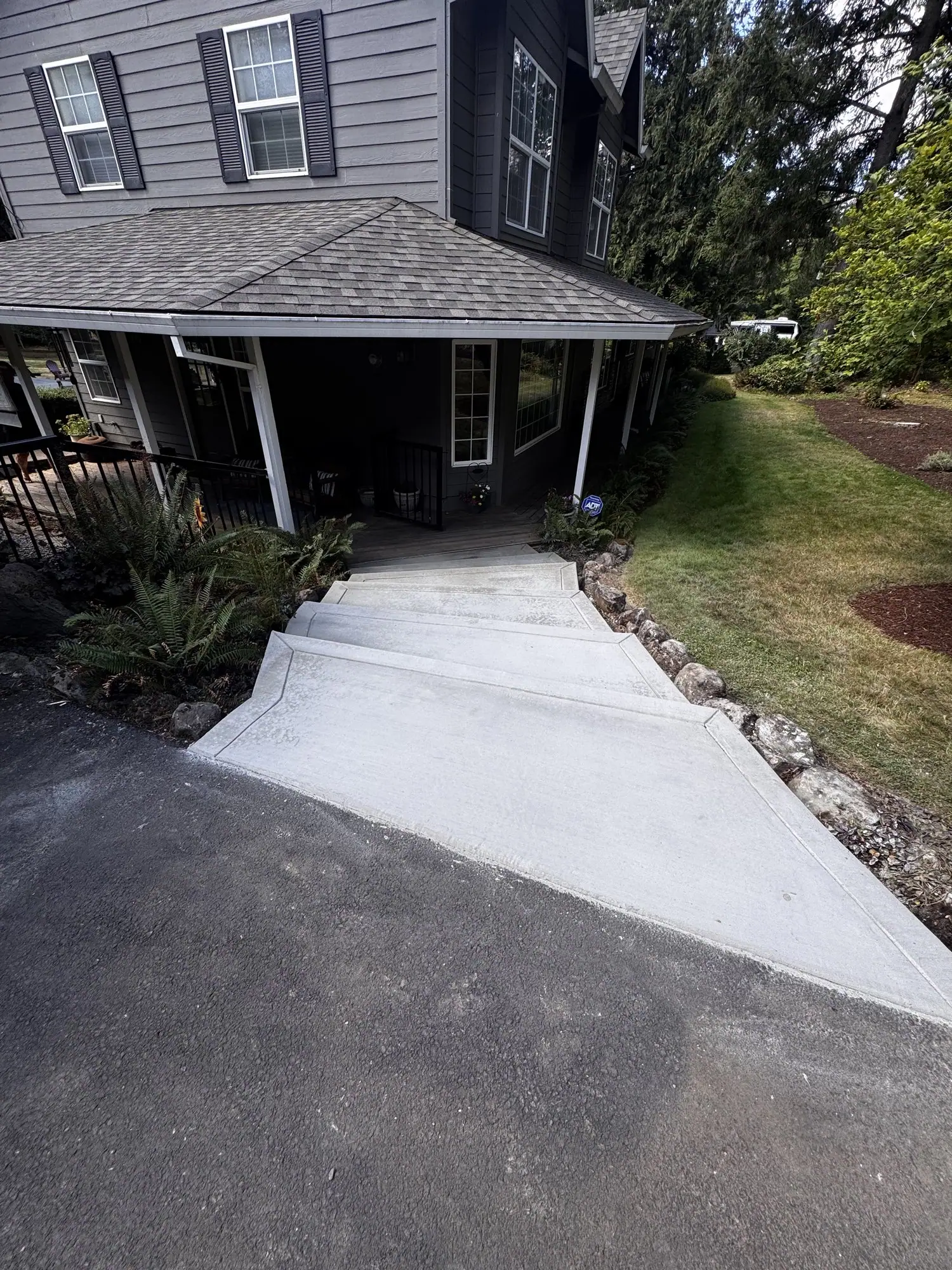
How wide should a driveway extension be?
Wide enough for the vehicles you actually park, with room to open the doors. Angi’s driveway width guide gives these common widths:
- One car: 10 to 12 feet.
- Two cars: 20 to 24 feet. At 20 feet two cars fit but the doors can't open side by side; at 24 feet they can.
- Three cars: 30 to 36 feet.
- Each parked car needs at least 9 by 18 feet.
- For a work truck, RV or trailer parked long term: 12 feet wide instead of 10.
Before you settle on a number, park your vehicles where the extension will go, open the doors, and walk the path from the car to the front door. A strip that's 2 feet too narrow means stepping into the lawn every day, and a few extra feet of concrete costs much less than doing the job twice.
One way to save money and paperwork: keep the existing opening at the street and widen the driveway only closer to the house. Angi's guide suggests the same approach where cities limit driveway openings. In Vancouver, that still needs the land use permit for modifying the driveway, but if nothing changes in the right-of-way, you may not need the right-of-way permit or a new apron. The planner will tell you when you apply.
Don't overdo it. Concrete Network points out that widening a very narrow driveway can add value, but a driveway that looks too wide for the house can lower it.
Will the new concrete match the old driveway?
Not right away, and rarely exactly. New concrete starts out lighter than concrete that has spent years in the weather, and different cement and sand from a different day's batch can change the shade. The gap usually narrows as the new section weathers. Concrete Network says that if you pour the extension and do nothing else, the difference between old and new will probably be noticeable.
You have four ways to handle it:
- Accept the difference and let the new section weather. On a broom finish driveway this is the cheapest choice.
- Make it look planned. A band of exposed aggregate or a stamped border where old meets new turns the seam into a design line.
- Stain or resurface the whole driveway so it all reads as one surface. Concrete Network lists resurfacing at about $3 to $25 a square foot, depending on the product.
- Replace the old driveway at the same time. If it's already cracked, sunken or near the end of its life, a full driveway replacement poured with the extension costs more now but gives you one even slab.
Exposed aggregate driveways are the hardest to match, because the look comes from the stones. Angi notes that repairing or adding to exposed aggregate is harder, especially matching the color of the existing stone. Bring a photo of your driveway to the estimate, and ask whether the same rock mix is still available.
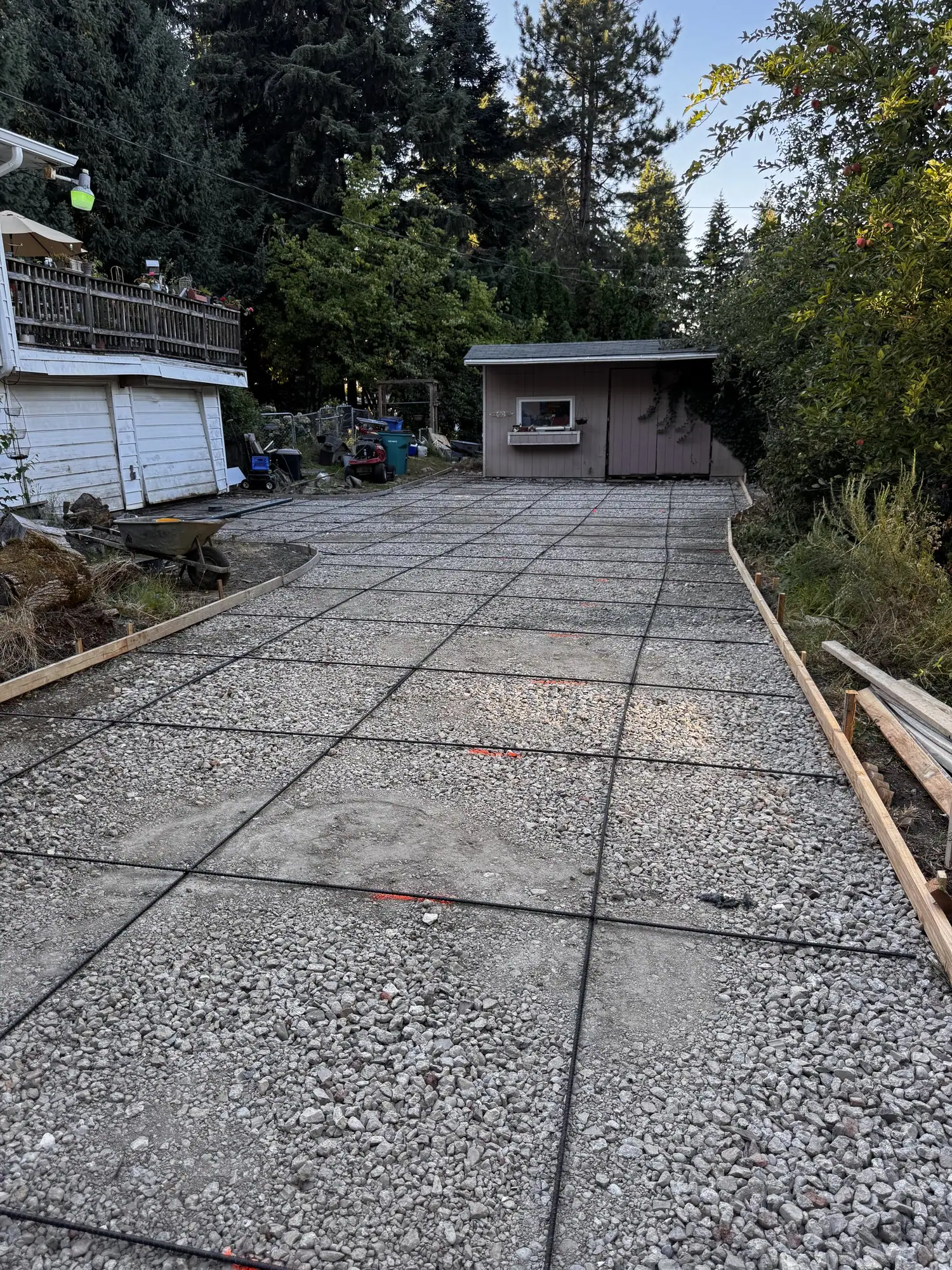
How a concrete driveway extension is built, step by step
Knowing the steps helps you compare bids, because a low price often means one of them is missing.
- Measure and price the job, including the tie-in, base and any approach work.
- Get the permits: the city's land use permit, plus a right-of-way permit if the approach changes.
- Call 811 for a utility locate. Washington law (RCW 19.122.030) requires the notice at least two full business days before digging.
- Dig out sod and soft soil, and shape the ground so water drains away from the house.
- Spread crushed rock and compact it in layers until it's firm.
- Saw-cut the old edge clean, drill in dowels if the plan calls for them, and set the forms.
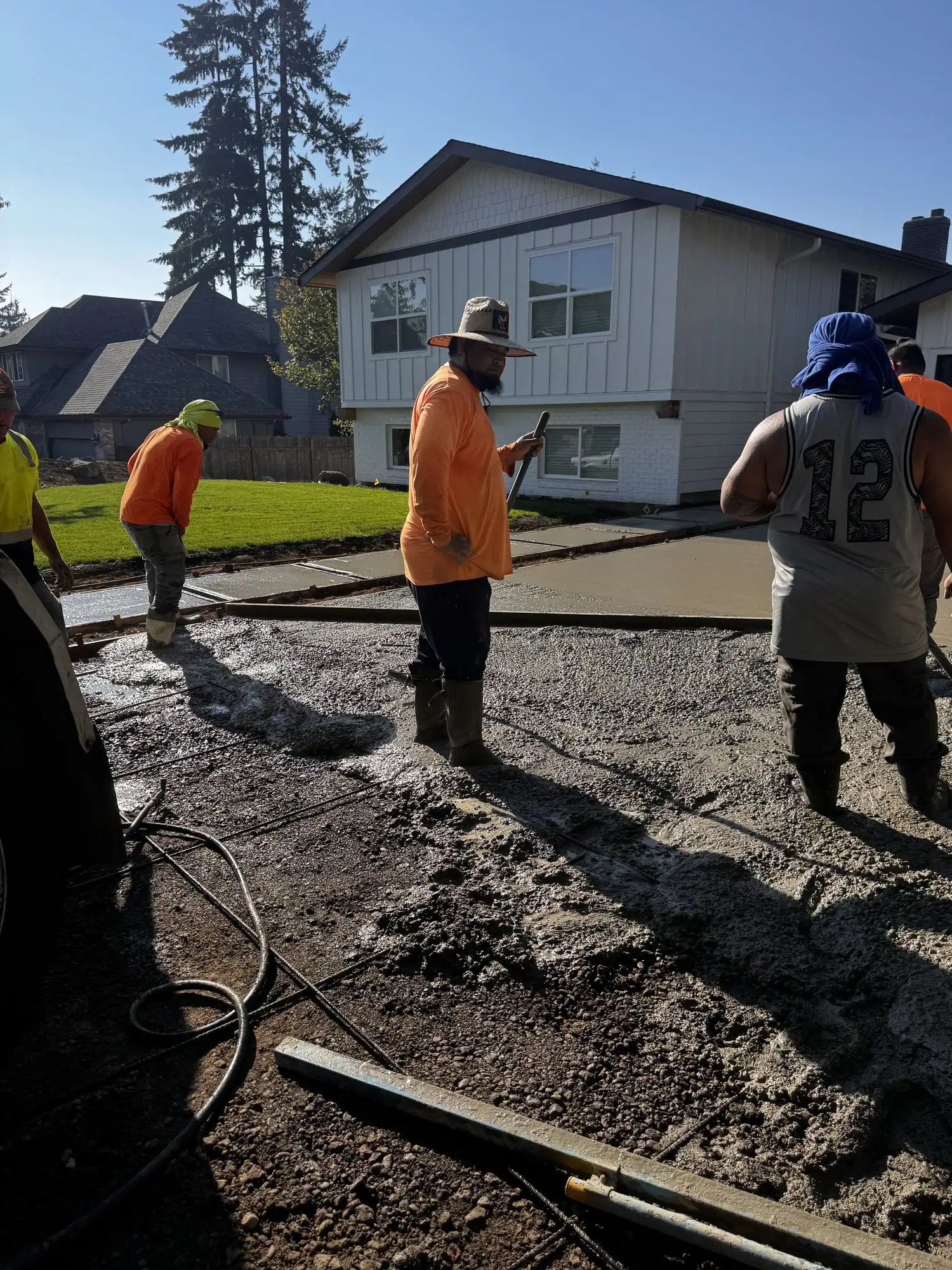
- Pour, level and finish the concrete to match or contrast with the old driveway, then tool or cut the control joints.
- Keep traffic off while it cures.
Most extensions take a few days of prep before a single pour day. HomeGuide says new concrete can usually take foot traffic after 24 to 48 hours and a car after about 7 days, with heavy vehicles waiting the full 28 to 30 day cure. In Vancouver's cool, wet months, plan on the long end, since cold slows curing.
Is a concrete driveway extension worth it, or is gravel enough?
Gravel is cheaper to put down. Angi lists gravel at about $4 to $5 a square foot for an extension against about $10 for concrete. But inside Vancouver city limits, gravel isn't an option for a driveway: the city's permit page says driveways must be paved, and its guide to parking on private property says gravel is not an approved surface for parking or storing vehicles. In unincorporated Clark County, ask Permit Services what they accept before you price it.
The same city guide says motor vehicles must be parked on an improved, all-weather surface. If a second car already sits on the lawn beside your driveway, an extension is the fix that follows the code, and it ends the ruts and mud that come with it.
Concrete also lasts. HomeGuide puts the life of a concrete driveway at 30 to 40 years with maintenance, and an extension built on a good base, tied into the old slab and drained properly should keep pace with the rest of the driveway. If you're adding space for a boat, trailer or RV, build it like an RV pad, with a thicker slab and a deeper base. MJ Concrete pours extensions and parking pads as part of its driveway installation work.
About MJ Concrete
MJ Concrete is a concrete contractor in Vancouver, WA, owned and run by Tevita Lehauli, pouring driveways, patios, walkways, foundations and walls across Clark County since 2019 (7 years). Every estimate is free and done in person. More about us.